Go Ahead, Book the Anniversary Trip. I'm More Interested in Your Next Thirty Seconds.
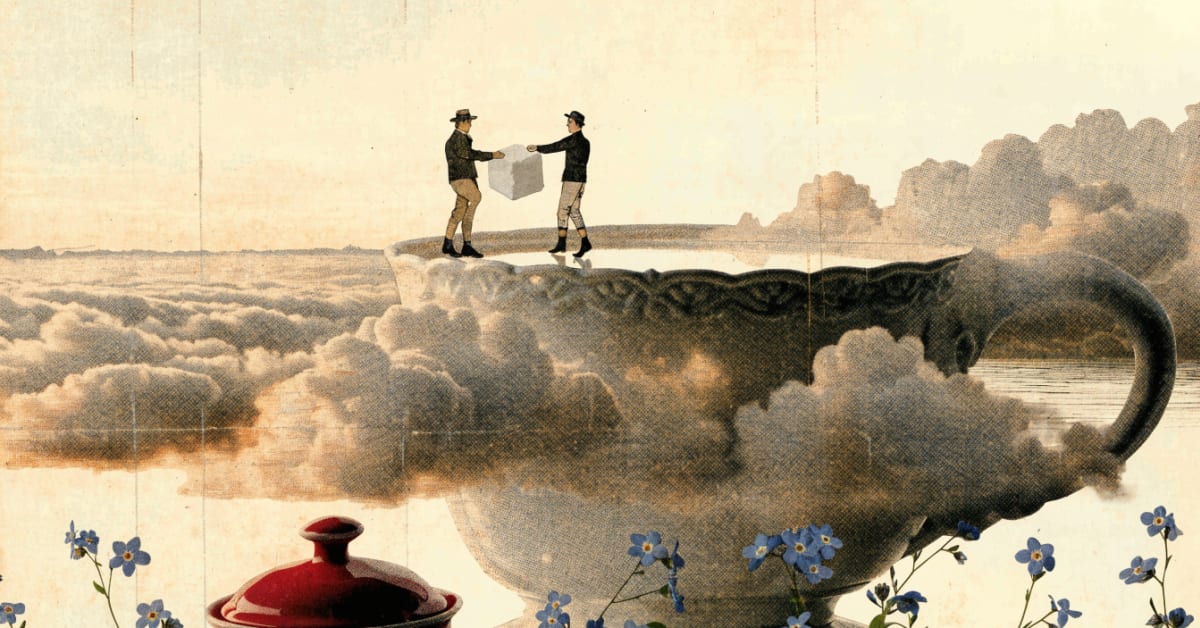
Small romantic gestures matter more than grand ones because desire runs on frequency, not magnitude. The anniversary trip is a memory. The coffee made exactly how they take it, every single morning, is a relationship. Grand gestures decorate love. Thirty-second rituals build it.
TL;DR
- Grand gestures are memory events — beautiful, expensive, and over. The glow of even a spectacular vacation fades within about a week of being home.
- A micro-ritual is a thirty-second act of specific attention, repeated: the coffee made how they take it, the two-second kiss instead of the drive-by peck, the plate made for them without asking.
- The Gottmans' research on “bids” found that tiny turns toward your partner — not vacations, not jewelry — are what predict whether couples last.
- Food is the easiest micro-ritual channel you own, because you're already eating three times a day. The saved bite costs nothing and says everything.
- Two micro-rituals to start tonight are below, free. The full layered system — how they stack into a designed evening, matched to your partner's sign — lives in Appetite for Seduction's Zodiac Date Night Guides.
Why the Big Gesture Doesn't Carry
Picture the trip. You planned it for months — the little hotel, the long dinners, the two of you actually looking at each other over wine instead of over a laundry basket. It worked. You came home glowing. And then, somewhere around day six back, you're standing in the same kitchen having the same conversation about whose turn it is to deal with the recycling, and the glow is just… gone. For real — you've lived this.
Here's the thing: the trip didn't fail. It did exactly what grand gestures do — it made a memory. Memories are lovely. But a memory is filed under things we did, and desire doesn't live in the filing cabinet. Esther Perel — the psychotherapist who reshaped how the world talks about long-term desire — has spent decades on why wanting fades in long-term love, and her answer is never “insufficient vacations.” It's what happens in the everyday, where couples slowly stop seeing each other — the slide that ends with two people feeling like very polite roommates.
Don't get me wrong — take the trip. I will never argue against a long dinner in another country. But a grand gesture is a deposit you make once a year into an account that gets debited daily. The math was never going to work.
What a Micro-Ritual Actually Is
A micro-ritual is thirty seconds of specific, repeated attention. Not a vibe. Not “being more thoughtful.” Specific. The coffee made exactly how they take it — the right mug, the splash of oat milk, the half sugar they always claim they're quitting — handed over before they ask. The two-second kiss at the door instead of the drive-by peck aimed somewhere near a cheekbone. The plate made for them without asking, because you already know they want the crispy end piece. That one.
What makes it a ritual instead of a favor is the repetition. Psychology Today — the outlet where working clinicians publish for the rest of us — has a whole body of writing on the power of positive couple rituals: repeated small acts become the private language of a relationship, a thing that belongs to the two of you and nobody else. A favor says I helped you today. A ritual says I know you, and I keep choosing you. Different sentence entirely.
This is the entire premise behind Craft NightBachelorette Parties — the experience I’m building now (the list gets first access) — small, designed moments that take minutes, not evenings. Because after eight years of teaching couples, I can tell you the ones who feel wanted are almost never the ones with the best anniversary stories. They're the ones with the best Tuesdays.
The Math of Frequency vs. Magnitude
All right, receipts. John and Julie Gottman — the married research team who spent four decades watching real couples in their Seattle lab — built their work around something they call “bids”: the tiny moments where one partner reaches for attention, and the other either turns toward or turns away. In their long-term studies, couples who stayed happily together turned toward each other's bids about 86 percent of the time. Couples who divorced managed 33. Nobody's marriage was decided by a helicopter proposal. It was decided at the level of “huh, look at that bird” — and whether anyone looked up.
The broader research keeps agreeing. Work in the Journal of Social and Personal Relationships — the peer-reviewed home of relationship science — ties satisfaction and desire to perceived partner responsiveness in daily life: the steady drip of being noticed, not the annual flood of being impressed.
So run the numbers. One grand gesture a year is one data point. A thirty-second ritual, daily, is three hundred sixty-five. Your partner's nervous system is not tallying magnitude. It's tallying evidence — and frequency is the evidence. If you don't know what your partner's version of being noticed even looks like, the Food Fantasy Quiz takes three minutes and will tell you more than the last three gifts you bought did.
Food Is the Easiest Micro-Ritual Channel You Own
You could build micro-rituals out of anything. But food is the shortcut, because the infrastructure already exists — you eat three times a day, every day, forever. That's three daily openings for thirty seconds of attention that costs you nothing.
The saved bite: you're eating something outstanding, and you slide the last bite — the best bite, and you know which one it is — across the counter without a word. Something in the pan when they walk in: they open the door after a flat, gray day, and the house smells like butter and garlic and somebody expected them. That smell is a sentence. It says you were on my mind before you arrived, and it says it before they've taken off their coat.
And notice what none of this requires: a menu, a plan, a babysitter, or talent. This is not cooking together as a date night — that's its own beautiful thing. This is smaller. One bite, one pan, one person deciding to be known for thirty seconds. Do it for a week straight and watch what starts happening around the kitchen. It just might lead to something…
What to Try Tonight
Two micro-rituals, free, starting tonight. One: the two-second kiss. Take the goodbye peck — or the hello peck, whichever one has gone fully automatic — and hold it for a slow two-count instead. Same doorway, same person, two actual seconds of arrival. Every day, no exceptions, no announcement. Two: the saved bite. Once a day, the best bite of whatever you're eating goes to them, slid over silently. No “here, try this.” Just the bite, and eye contact if you're feeling dangerous. Try it.
That's the free layer, and it's real — those two alone will change the temperature of a week. What I can't give you here is the system: how micro-rituals layer from thirty seconds into a full designed evening, and how the right ones differ by sign — because the gesture that melts a Cancer reads as background noise to an Aries. That architecture lives in the Zodiac Seduction Guide collection, built one sign at a time.
The trip can wait until the anniversary. The next thirty seconds are already here.
An entire evening built around how your partner actually experiences desire.
Frequently Asked Questions
What are small romantic gestures?
Small romantic gestures are thirty-second acts of specific attention: coffee made exactly how your partner takes it, a two-second kiss instead of a rushed peck, the best bite of your food handed over without a word. The power isn't the size — it's the specificity and the repetition.
Do small gestures matter more than big ones?
Yes. Grand gestures create memories; small repeated gestures create the daily evidence of being chosen, which is what desire actually runs on. The Gottmans' research found couples who last turn toward each other's small bids about 86 percent of the time — no vacation required.
What is a micro-ritual in a relationship?
A micro-ritual is a small act of attention — usually under a minute — repeated until it becomes a private language between two people. AFS founder Shani Delamor's rule from eight years of teaching couples: it has to be specific to your partner, and it has to repeat. Once is a favor. Daily is a ritual.
What are easy daily habits for couples?
Start with three: a real two-second kiss at one fixed transition (leaving or arriving), one saved bite of anything good, and making their coffee or tea the way they take it without asking. Each takes under thirty seconds and each says I know you — which is the whole point.
How do I show love without spending money?
Attention is the currency, not cash. Save them the best bite. Have something in the pan when they walk in. Remember the thing they said on Tuesday and bring it back on Friday. Appetite for Seduction's Zodiac Date Night Guides are built on the same principle — the design costs thought, not money.
Why do grand gestures feel empty sometimes?
Because a grand gesture can't cover for thirty absent days — and partners feel the math even when they can't name it. A big gesture on top of daily attention feels like celebration. The same gesture instead of daily attention feels like an apology. The gesture didn't change; the evidence underneath it did.
Sources
- Esther Perel — “Desire in Long-Term Relationships.” estherperel.com
- The Gottman Institute — “Turn Toward Instead of Away” (bids and turning toward). gottman.com
- Psychology Today — “The Power of Couple Rituals.” psychologytoday.com
- Journal of Social and Personal Relationships — partner responsiveness and everyday relationship maintenance. journals.sagepub.com