Why Cooking Classes Work as Bachelorette Parties
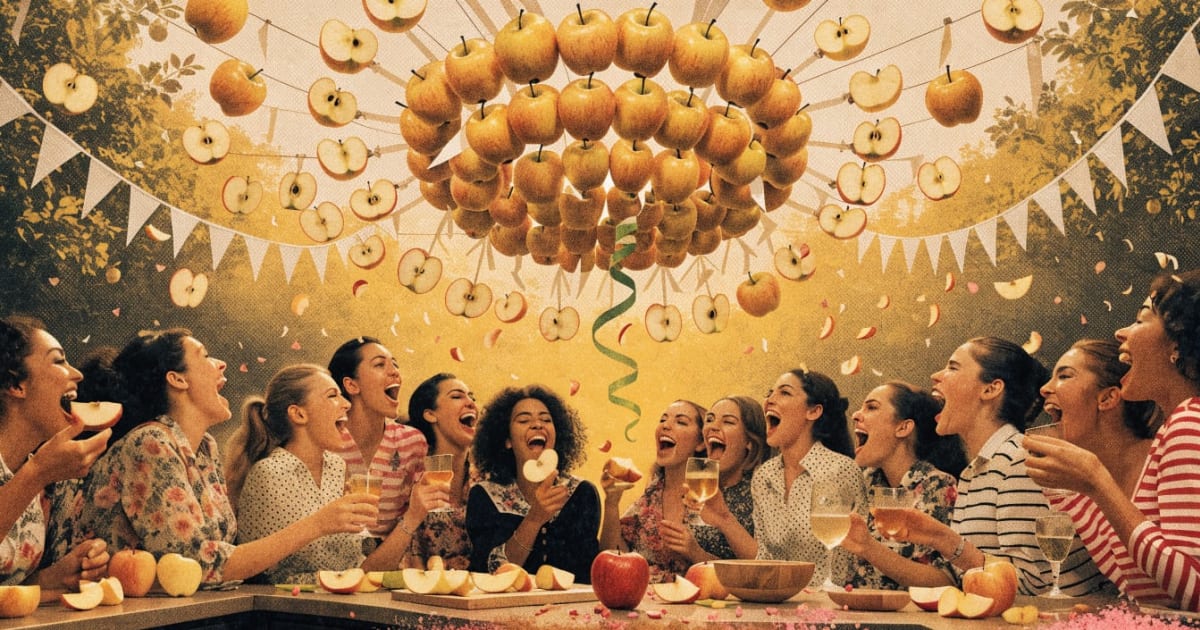
Eight women are crowded around one kitchen counter, and every single one of them has a knife and an apple, and nobody is being precise about it. Apples get quartered, then quartered again, cores flying into a bowl that's filling up faster than anyone's actually eating — because eating isn't really the point right now, the noise is. Someone's narrating her own knife work like a cooking show host. Someone else has already dropped a slice on the floor and eaten it anyway. It's loud, a little chaotic, nothing like a seated dinner, and it is, without question, the best part of the night so far.
Nobody in this scene is "the cook." That's the whole design, and it's not an accident.
What's actually hard about planning a bachelorette?
Not the bride's experience — that part's easy, she'll have fun almost anywhere as long as her people are around her. The actual hard part belongs to the maid of honor, and it's logistics, full stop. Getting eight to twelve women with eight to twelve schedules to agree on one date, usually via a Doodle poll that half the group ignores until the morning it closes. Fronting money nobody's paid back yet, because someone has to commit before the Venmo requests can even go out. And underneath both of those, the quieter dread of picking the actual activity — because a bar crawl feels tired, a stripper feels like a bit nobody actually asked for anymore, and a spa day is what you do with your mother, not your college roommates the night before someone gets married. The maid of honor isn't planning a party. She's solving a logistics problem with an entertainment requirement bolted onto it, and almost nothing out there addresses that directly.
What do people actually want instead of the cliché?
One line from a 2012 bachelorette group, unprompted, still holds up better than most of what a vendor page has written since: *"we wanted to have fun, get to know each other and skip the strippers."* That's it. That's the actual brief — most groups just never say it out loud to whoever's stuck planning. They want to laugh, they want something loose enough that the shy cousin and the loud college roommate both have something to do, and they want to quietly skip the part of the night that always feels more obligatory than fun. Nobody's pinning that to a mood board. They're just relieved when someone else suggests it first.
Why does a cooking class solve this specifically?
Because it's built for a crowd instead of a couple, and for entertainment instead of a formal meal. Apples aren't a seated dinner requiring a menu and a timeline — they're something a whole group can attack at once, badly, loudly, with zero risk of ruining anything, because a badly cut apple is still an apple. Someone else does the actual hosting, which means the maid of honor gets, for two hours, to just be a guest at her own event instead of the one running it. It solves the Doodle problem by putting the whole group in one room at one time — a single shared plan instead of ten schedules being negotiated separately. It solves the money problem the same way: one plan the group commits to together, instead of bar tabs quietly adding up per person all night. And it solves the stripper problem simply by being something else entirely — something everyone can talk about afterward without anyone performing embarrassment about it. What actually makes cooking together work as connection has been covered here before for couples; the group version runs on the same mechanism, just multiplied by eight and turned up considerably louder.
The cores go into the trash together in a small avalanche, and somebody's still laughing about the apple she dropped forty minutes ago. Nobody here got asked to cook — they got asked to have a good time with a knife in hand, which turns out to be a much easier ask. If your group wants a lower-stakes read on what a night like this actually feels like, send the Food Fantasy Quiz around the group chat before you settle on anything — it's a faster read on eight people than a group text ever will be.