What's a Romantic Fall Dinner to Cook Together?
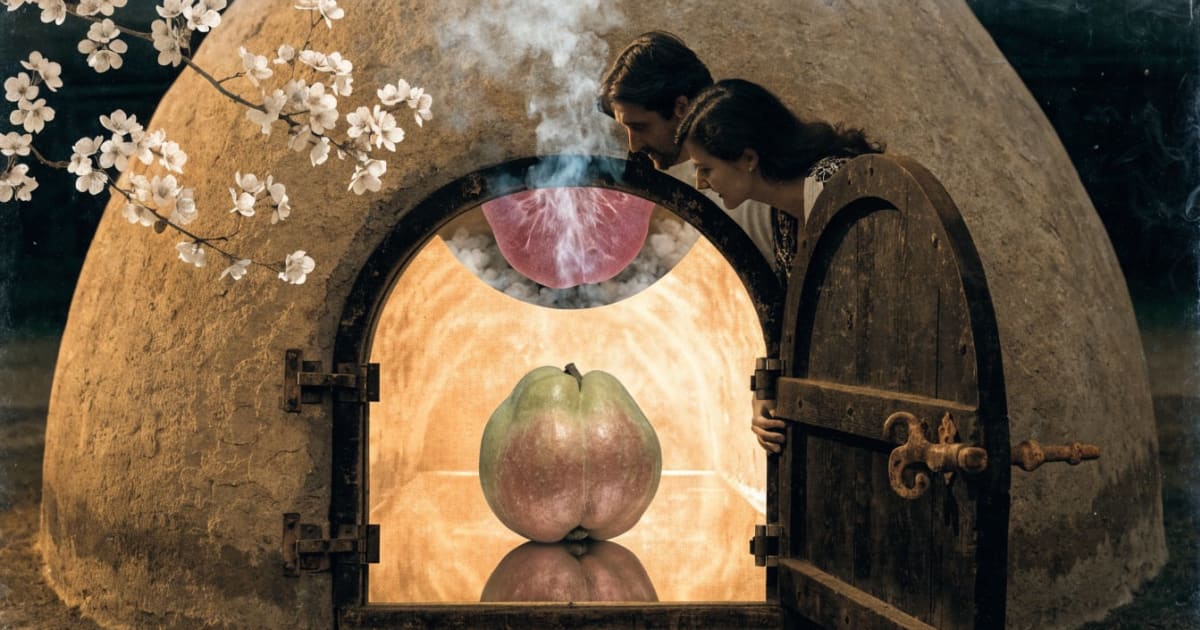
One quince, on the cutting board, hard as a green apple carved out of wood. One of you turns it over, unconvinced. It smells faintly floral, almost like perfume, which only makes the situation stranger — something that smells this good and tastes, raw, like nothing at all. You could put it back in the bowl. You don't. You cut it in half instead, and now there's no version of tonight that doesn't involve waiting for this thing to become something.
A roasted quince dish — the fruit that's inedible raw but turns rose-pink and fragrant after an hour in a low oven — cooked together while the kitchen slowly fills with its smell. The waiting is the date; the eating is the bonus.
What actually makes a fall dinner feel romantic, not just seasonal?
Not the ingredients on the counter — the pace of the evening around them. Anyone can buy the fall produce; the best produce for a date night dinner right now is a five-minute grocery decision. What actually reads as romantic is a dish that asks something of you — attention, patience, a reason to stay in the kitchen instead of retreating to separate corners of the couch. Quince, specifically, can't be rushed into anything. Cut it, and it just sits there, hard and pale and unpromising, daring you to trust it.
Why does quince work better than anything easier?
Because it removes the option of shortcuts entirely. There's no quick-sear version of a quince — it goes into a low oven, in a little liquid, and it takes an hour or more to go from bone-hard and barely edible to soft, fragrant, and that famous rose-pink Harold McGee on quince has written about — tannins turning to something else entirely under heat, slow enough that you can't rush it even if you tried. Don't get me wrong, plenty of dishes are romantic because they're impressive. This one is romantic because it's patient, and because for that hour, there's genuinely nothing to do but be in the room together.
What do you do while it's in the oven?
That's the actual date. Not a project, not a performance — just the kitchen filling slowly with a smell like baked apple and something a little more floral, both of you doing something else nearby, half-watching the oven door like it's a kettle about to whistle. Come on now — cooking together was never really about the cooking. It was about the waiting, side by side, with nowhere else to be. Pour a glass, sit at the counter, talk about nothing, and let the oven do what it does at its own unhurried pace.
As she once wrote, about coffee: "Now there is no rushing the experience, I like it nice and slow, to enjoy sip by sip as the hot, slightly acid liquid dances in my mouth then trickles down my throat." Swap the coffee for a fruit that's been baking for the better part of an hour, and it's the same appetite for slowness, just aimed somewhere new.
An hour later, the door finally opens, and the quince inside is nothing like what went in — soft all the way through, rose-pink, split open right there at the table, the whole kitchen still smelling like it.
The full quince method — exact heat, exact timing, the syrup it sits in — lives in the cookbook, for whenever tonight becomes "let's actually do this properly."
Questions people ask
Can you eat quince raw?
No — raw quince is hard, tart, and nearly impossible to bite into comfortably. It only becomes edible, and turns that distinctive rose-pink, after slow cooking, usually an hour or more at a low temperature.
What's a good fall dinner to cook as a couple?
Something built around one slow-cooking centerpiece — a roasted quince, a braise, anything that needs tending but not constant attention — works better than a full multi-dish menu. It gives you a shared task with built-in waiting time already attached.
Where can I find the exact quince recipe?
The full method, with exact oven temperature and timing, is in the cookbook — this piece is the shape of the evening, not the recipe card.