What's a Good Knife Skill to Learn for Date Night?
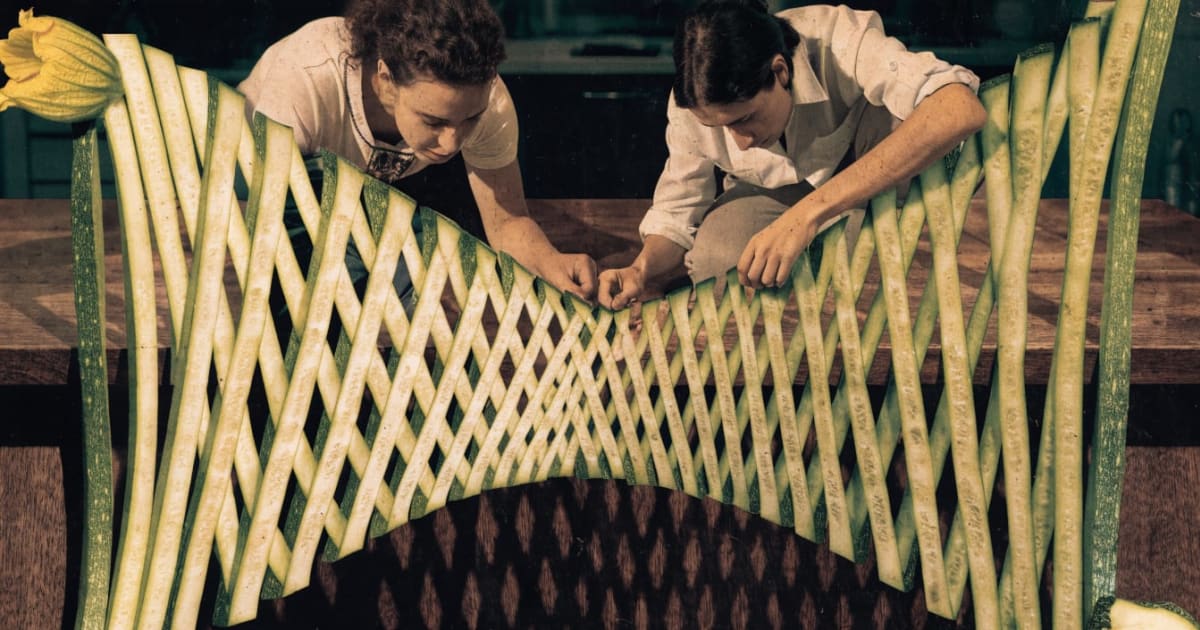
Somebody hands over a zucchini like it's a practice round, because it is — cheap, forgiving, nobody's going to be upset if this one goes badly. The first few slices come out uneven: too thick on one end, nearly translucent on the other, one piece that's really more of a wedge than a slice. Nobody's counting it against anyone. That's the whole point of starting here instead of on the onion that's actually going into dinner, or the fish that cost real money — zucchini is what you practice on when you'd rather ruin something than ruin the meal.
Twenty minutes later, though, this is dinner. It just took the long way there.
Why does knife work break the ice better than conversation does?
Because hands that are busy take the pressure off a face that has to perform. Two people standing at a cutting board aren't required to maintain eye contact, fill silences, or come up with the next thing to say — they're required to cut a vegetable, which turns out to be a far easier task to be nervous-but-fine at than conversation ever is. It's the same mechanic behind why a blindfolded taste test works as a first-date move: give the hands and the senses something concrete to do, and the small talk stops being the whole burden. In eight years of watching this exact segment happen in a room full of strangers or near-strangers, the knife work is consistently what breaks things open — not the welcome speech, not the icebreaker questions, not the toast. The room gets quiet, focused, and a few minutes later it's loose in a completely different way, because everyone's hands got busy before their mouths had to be.
What's the one cut worth learning?
The julienne — thin, matchstick-sized strips, cut lengthwise then crosswise — is worth more than any other single technique for a night like this, because it's genuinely learnable in real time and satisfying the moment it clicks. Start with the zucchini cut into flat planks, stack two or three, then run the knife down in even strips. The first attempt looks like kindling. By the fifth or sixth pass, something shifts — the wrist finds the rhythm, the strips start coming out actually even, and there's a small, real satisfaction in watching a pile of matchsticks accumulate that has nothing to do with how the dinner tastes. It's forgiving enough that a bad cut still cooks fine, and precise enough that getting it right feels like an actual accomplishment shared by two people instead of one demonstrating for the other.
What does getting good at this actually change, later?
It outlasts the night it happened on. People who learn a real cut on a date, together, tend to mention it months later — not the wine, not the playlist, but "we got good at the julienne that night" — because a skill is a souvenir in a way a nice evening isn't. Cooking together does measurable things for a relationship beyond the one night in question, and a knife skill is the most literal version of that: something learned together that's still there the next time either of you picks up a knife, on a completely unrelated Tuesday night with nothing romantic riding on it at all.
The zucchini's uneven cuts — the kindling-thick first pass, the better ones after — go into the pan anyway, because they were always going to become dinner regardless of how the practice went. That's the deal with knife skills and, frankly, most things worth learning with someone else: the early version doesn't need to be good, it just needs to happen. And for plenty more ways to keep using it after tonight, the cookbook picks up where the practice zucchini leaves off.