How Do You Make a Restaurant-Quality Anniversary Dinner at Home?
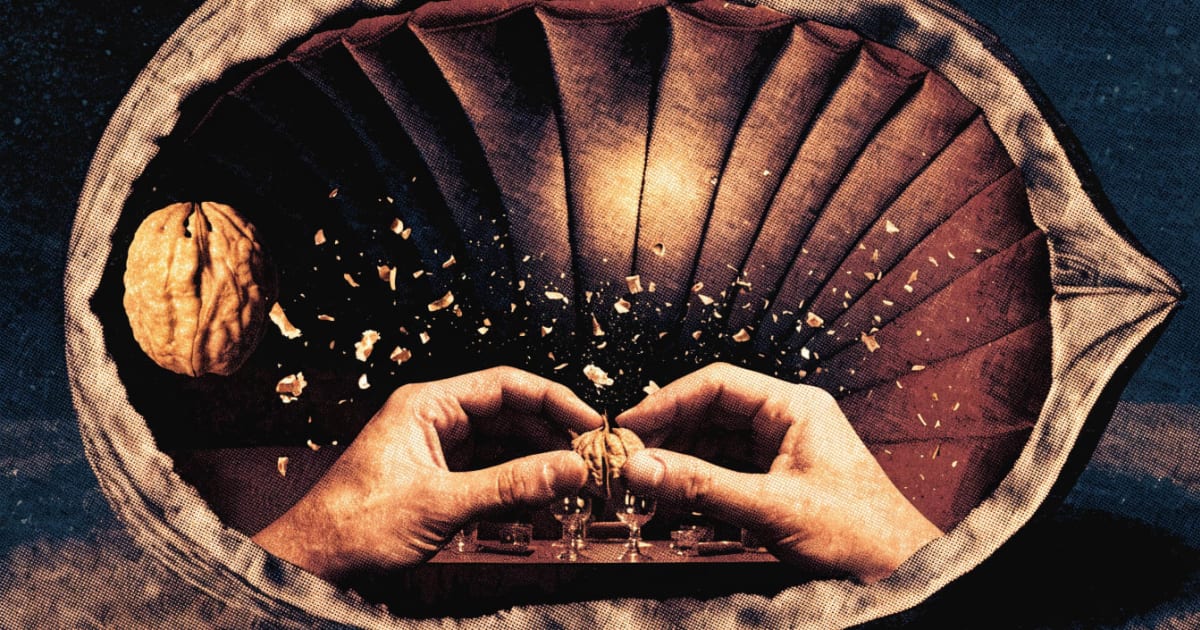
Mid-meal, a whole walnut gets cracked open right there at the table — not in the kitchen, not prepped ahead, right in front of you. Shell fragments scatter across the cloth. One half gets handed across, still warm from the hand that opened it. No server did this. No server could. For about thirty seconds, the whole table is just the sound of a shell giving way, and it's better than anything that's come out of a kitchen all night.
It's not the recipe, it's the pacing — one dramatic course, nobody standing up mid-meal, a moment that takes a little effort at the table instead of scrolling. Restaurants feel special because of structure, not skill, and that part is copyable.
What actually makes a restaurant dinner feel special?
Pacing, almost entirely. A good restaurant meal has structure built in — courses arrive spaced out, nobody's up refilling a water glass or checking the oven, and there's always exactly one moment designed to make you pause. It has very little to do with technical difficulty. What a food fantasy actually is tends to be this: not a menu, but a feeling engineered through timing. Most home cooks who try to recreate "restaurant quality" reach for harder recipes, when the thing they're actually chasing is slower ones.
Can you actually copy that at home?
Yes — because it's a design choice, not a skill. Pick one course that requires a small shared task, something you both have to do together at the table rather than just eat, and let everything else slow down around it. Fresh walnuts, cracked open by hand mid-meal, do exactly this — the harvest runs from now through early November, and there's no way to crack one quietly or quickly. It forces a pause. Small, doable, and felt rather than performed — a weeknight food fantasy works on exactly that scale.
What's the one thing home cooks get wrong trying to do this?
Over-complicating the menu instead of simplifying the pacing. More dishes isn't more atmosphere — it's more trips to the kitchen, more of exactly the interruption a restaurant dinner never has. Phones at the table do their own damage here too; what phones at the table do to a relationship is well documented, and a five-star feeling can't survive a screen glowing between two plates. One simple, confident main. No rushing, no phones, one course that needs hands. That's the whole formula — Tuscany runs on it too, just with better light.
Dinner's technically over. The shells are still on the cloth, and the last half of the last walnut is sitting in someone's palm, not quite handed over yet…
If tonight's version of this leaves you wanting a whole evening already built around exactly this pacing, Petit Rendezvous is worth a look — still finding its shape, but built on the same idea.
Questions people ask
How do you make dinner at home feel like a restaurant?
Focus on pacing rather than the number of dishes — slow the meal down, remove distractions, and build in one course that requires a small shared task at the table, like cracking walnuts or splitting a whole fish.
Do you need advanced cooking skills to make an anniversary dinner feel special?
No — restaurant atmosphere comes from structure and attention, not technical skill. A simple menu, served slowly and without interruption, reads as more special than an ambitious one rushed.
What's a simple way to add a "course" without extra cooking?
Something that requires a small physical task at the table — cracking fresh walnuts, peeling something by hand — gives the meal a moment of shared ritual without any additional cooking.